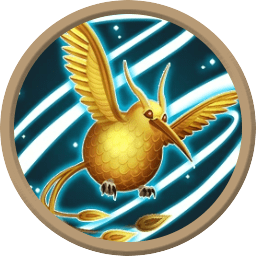
Fantastic Beasts and How to Slay Them: Troll

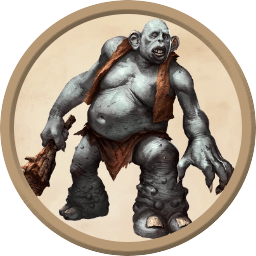
One downside of converting Harry Potter critters into D&D monsters is that sometimes you have to make a plainer version of something that is already in place. Trolls exist in Dungeons & Dragons, and they have a fun regenerative ability that makes them a dangerous for at lower levels, whilst also providing to fun moments for the uninitiated:

DM: what do you want to do on your turn?
Player: Wuh? The troll is dead. Why are we still in initiative?
DM: …no reason. Troll: [on the ground, about to regenerate] Tee-hee-hee.

At first glance, the Fantastic Beast troll is a much plainer creature. A big slab of dumb meat. It’s not going to be as fun to tinker with this stat block. However, the fact that they have “prodigious strength” means we have something to distinguish this new version.

Continue reading “Fantastic Beasts and How to Slay Them: Troll”

Fantastic Beasts and How to Slay Them: Thunderbird

When I first started creating these stat blocks, I did become concerned that I was seeing a lot of very mundane creatures in a list of supposedly ‘fantastic’ beasts. I just had to remind myself that further down the line, there were some very dangerous monsters, including a bird that could summon storms.

And here we are.

Continue reading “Fantastic Beasts and How to Slay Them: Thunderbird”

Fantastic Beasts and How to Slay Them: Tebo

When creating a monster for Dungeons & Dragons, there are some very simple ways you can make a very mundane creature interesting:

Number 1: you can make it undead. There’s a bear attacking me in the woods, pfft whatever. What? Zombie bear? Well… alright then, time to panic.

Number 2: you can give it the Misty Step spell. Nothing like a monster teleporting around the battlefield to put the wind up your adventurers.

Number 3: give them the power to turn invisible.

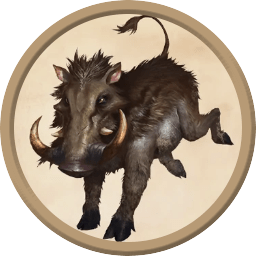
The Tebo chooses option number 3, making a big pig monster significantly more interesting.

Continue reading “Fantastic Beasts and How to Slay Them: Tebo”

Fantastic Beasts and How to Slay Them: Streeler

There’s a snail you can encounter in Dungeons & Dragons. It’s called a Flail Snail. It’s called that, because it has organic, spiky flails where it’s eye stalks should be. It definitely exists purely because ‘snail’ and ‘flail’ rhyme.

At least the snail from Fantastic Beasts is a significantly different monster. Not like the hippogriffs and griffins, where I was having to split hairs to make a monster that was distinctly different from what was there before. The Streeler is a very different kind of strange snail.

Continue reading “Fantastic Beasts and How to Slay Them: Streeler”

Fantastic Beasts and How to Slay Them: Sphinx

I’ve used riddles in my D&D adventures. I have, therefore, watched a group of intelligent people overthink a mind puzzle for much more time than you would expect, as I peruse the rest of the options from ‘riddles for kids‘, wondering if I could have been more generous.

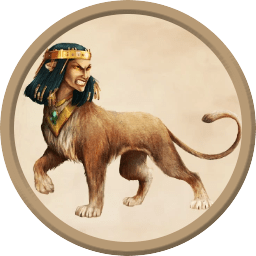
I am pretty sure that most encounters with a sphinx would end in violence…

Continue reading “Fantastic Beasts and How to Slay Them: Sphinx”

Fantastic Beasts and How to Slay Them: Snidget

Footballs were made from pig bladder. Just consider that for a second. People in the medieval world butchered a pig, put the bladder to one side, and said to themselves “let’s stitch that up and fill it with air, I have a feeling we can have some fun with that later”.

It certainly puts the Snitch into perspective. Wizards had to invent a new enchanted ball because they were killing off too many of the tiny birds they were using in their flying broomstick game. It’s still really weird when you lay it out like that, but it shows you wizards and muggles are just as weird as one another.

Regardless, here’s a tiny Harry Potter-verse bird for your Dungeons & Dragons.

Continue reading “Fantastic Beasts and How to Slay Them: Snidget”

Fantastic Beasts and How to Slay Them: Snallygaster

It is important to note that the term ‘bulletproof’ does not mean ‘completely immunity to bullets’. Materials which are bulletproof resist the impact, yet too many bullets, or one very well placed shot, can find a way through.

I mention this, because when we go to make Snallgaster as a D&D critter, and we see the phrase “bulletproof hide”, we should know that we don’t have to get too silly with the armour class. Having said that, having a bulletproof body is only one of a few things that make the Snallygaster a very real threat.

Continue reading “Fantastic Beasts and How to Slay Them: Snallygaster”

D&D Map: The Whitehart Manor

I made a map! After a big gap, I’ve written a new D&D adventure. This adventure needed a particular location; a vague outline or premade map would not suffice. So I took a chance and map my first ever battle map.

I’m quite happy with the results. So I thought I’d share it with you:

Continue reading “D&D Map: The Whitehart Manor”

Fantastic Beasts and How to Slay Them: Shrake

The Shrake is a magical creature made entirely out of spite. That’s not exactly what the book says, but it’s 100% accurate. Wizards brought this big fish into being because Muggle fisherman wronged them.

It was not because of some centuries-long, epic feud between wizard and non-wizard. A bunch of Muggle fisherman once made fun of a group of wizards at sea, and the wizards’ reaction was to create an entire species to ruin the livelihood of those fisherman.

…and presumably every fisherman who travelled those same waters.

…not to mention disrupting the economy of any coastal village the fishermen traded with.

…the local ecosystem was probably impacted too. All because a boat-full of wizards couldn’t take a joke.

Continue reading “Fantastic Beasts and How to Slay Them: Shrake”

Fantastic Beasts and How to Slay Them: Sea Serpent

Turning a Fantastic Beast into an actual beast in Dungeons & Dragons is something you have to be wary of. This is something I’ve dwelled on in the past. A ‘beast’ in D&D is commonly a ‘real world’ sort of animal, or adjacent to a very normal, vanilla animal. So most Fantastic Beasts don’t fit that category. Some are more ‘fey’-like, some more fiendish, some are ‘monstrosities’. Dragons are, well, ‘dragons’.

The reason you have to be careful is that there are spells, abilities and moves that allow ‘beasts’ to be used by the players. Magical versions can be summoned, weak beasts can be familiars, druids can morph into them.

The sea serpent is one such Fantastic Beast that fits the ‘beast’ category, but is a very big addition, and pretty strong with it. Nevertheless, I kind of like this option being added to the selection. The number of sea beasts in D&D is on the more limited side, and it’s so strong that it actually avoids most opportunities to be used by the adventurers.

Continue reading “Fantastic Beasts and How to Slay Them: Sea Serpent”