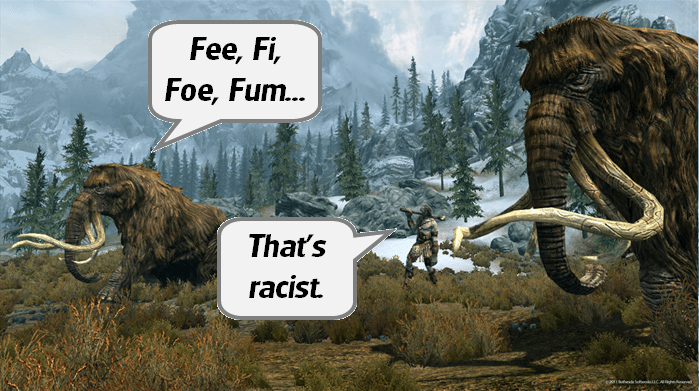
Should open world games rethink how they tell stories?

We’ve all observed stories that use the ‘x days later’ device. A linear narrative can avoid weeks, months and years of bunkum by jumping to the next interesting bit. It’s a trick which allows the storyteller to stick to the good bits, providing it is used effectively. It’s a trick we can all accept and appreciate.

Now imagine you were reading a book or watching a film where the inverse happened. Instead of moving time forward ‘x weeks’ into the future, the story instead took a detour which lasted for days or weeks, only to return to the main story as if no time had passed. In most cases, we would find that very odd and a little jarring (unless it’s a dream-sequence or a peculiar plot twist). Yet open world games let this happen all the time.

Videogames can be rigidly linear in gameplay and story, or completely non-linear in either area. In many games story can be absent entirely, but sometimes I feel that the combination of linear story-telling and non-linear gameplay feels unwieldy. We as gamers are meant to follow a pattern of close-knit events whilst simultaneously spending hours on exploration and random side missions.

Continue reading “Should open world games rethink how they tell stories?”

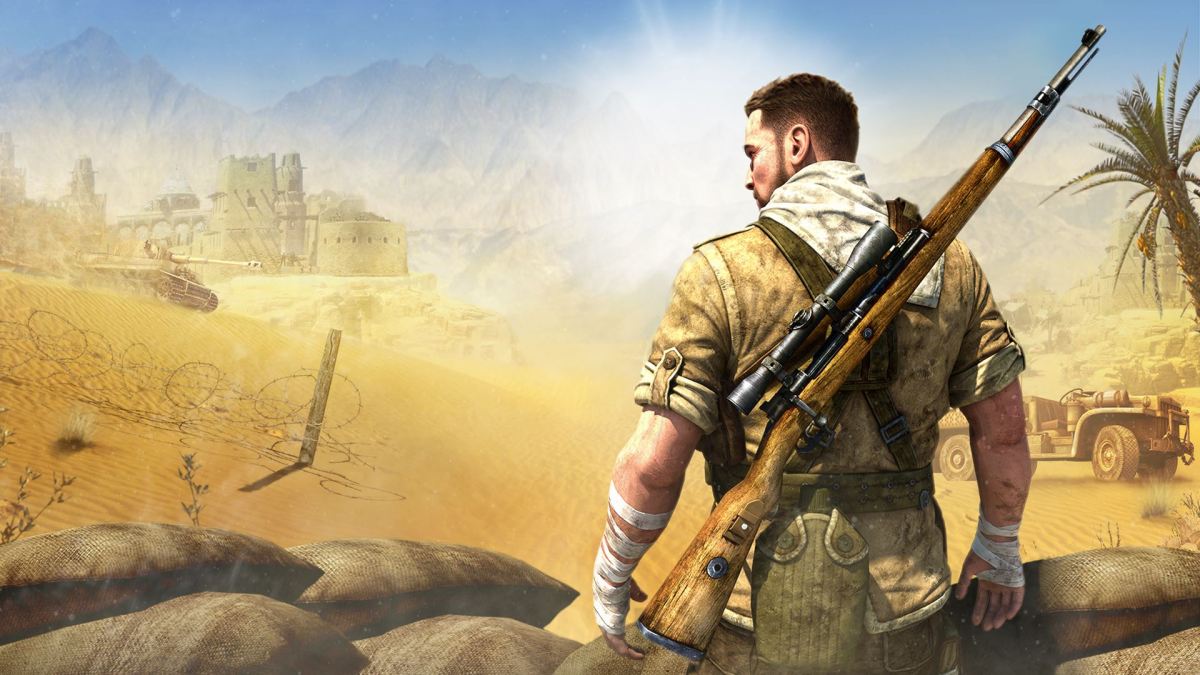
World War Two Snipers – Videogames vs History

History can be less exciting than the fiction it inspires. I can accept that with a smile. War movies, TV shows and games can bathe the World War Two era with so much action and violence that the reality is all but lost. That is not a bad thing, in any way. Not only is it pleasing to see what the historical context can be morphed in to, but allowing some distance between exciting fiction and grim reality is often appreciated. However, sometimes the reality is exciting enough without poetic license. Furthermore, the History of the World Wars still offers so much more inspiration yet to be tapped.

Continue reading “World War Two Snipers – Videogames vs History”

Gaming Fantasy Dinner Party – Guest Number One

There are hundreds of exceptional videogame characters. Mighty men and women capable of cutting down whole armies of monstrous creations. Warriors with astonishing abilities. Wielders of inconceivable magic. Defenders of galaxies. Heroes. But which ones would you actually invite into your own home? Could you actually trust these creatures to be civilized?

Sonic might be an iconic character, but I wouldn’t want him in my house. He’s far too hyperactive and overly competitive. Plus, the way he eats hotdogs proves he wouldn’t make the best dinner guest. Kratos might be able to take on the Gods, but I can’t see him sitting in my living room discussing his favourite music. Lara Croft might make for good company… if she doesn’t spend all her time bragging to everyone about her travels. Guybrush Threepwood would have to curb his clumsiness. Gordon Freeman would have to learn to be more sociable.

Continue reading “Gaming Fantasy Dinner Party – Guest Number One”

Dying in Game: What’s the weirdest way to go?

It was Nietzsche that wrote, “What does not kill me makes me stronger”. In reality, that’s regularly true. When it comes to videogames, it really depends on how you are about to be killed. In some cases, dying is part of the learning process. In other games, your demise will only result in a minor punishment, or have no impact whatsoever. It’s uncommon for a video game to kill you in a way that doesn’t make you stronger.

In other words: videogame deaths are odd. There are two main reasons for this. Firstly, dying in-game usually lacks permanence. Each fatality can be brushed off with nonchalance. Secondly, there is an ever-expanding variety of ways to go out. Whilst they may fit the game in some way, there’s no hiding their bizarre nature.

So the discussion I place before you, morbid as it might be, concerns weird deaths. What are the oddest ways to kick the bucket? Do you have a preferred way to go out? Below is a list of some – but by no means all – of the unusual ways game will kill and resurrect the player’s character(s).

Continue reading “Dying in Game: What’s the weirdest way to go?”

How Historically Accurate is Skyrim? Part 5

Skyrim is doomed. The “hero” I have created isn’t really focused on saving the day. They have spent more time picking flowers and catching butterflies than they have spent killing dragons. We’ve meandered into so many caves and caverns, distracted by so many side quests, that I’m not sure how far down the main story we’ve travelled. I and my created character are so easily distracted, that the final dramatic confrontation may never actually come to pass.

Continue reading “How Historically Accurate is Skyrim? Part 5”

An Apology to The Orange Box

Might the Gaming World forgive me? May my sins be absolved? In my youth, I was foolish fool of fools. In my haste, and childish recklessness, I made a grave error: I sold my copy of The Orange Box less than two weeks after purchase. Please! Hold your chastisements for a moment, dear merciful reader. Allow me to repent, before judgement is passed.

As with most games I play, I arrived late to this soiree. I must admit that I had yet to play Half Life 2 by the release of the collection.  I bought The Orange Box in 2009 – the last year of university – on the recommendations of countless, honourable gamers. I’d been told how good the Half Life games were. (Yes, I had not played Half Life 1 at this point either; the scroll of my misdeeds will only continue to unravel.) I had also heard hearty praise of Portal and Team Fortress 2, and was anxious to share in the collective ecstasy.

Continue reading “An Apology to The Orange Box”

Does History defend the tradition of Male Protagonists?

I enjoy finding parallels between Gaming and History, and the treatment of gender in each field shows some commonality. Within the realm of video games, gender is a topic of debate/discussion/angry rants all of itself. The representation of women is continuously dissected and revaluated. It’s not something that should have to be so scrutinised, but it’s good that the discussion is so positive a lot of the time. In History, women are also considered as a separate topic for discussion a great deal of the time. It’s not ideal, but to avoid the topic at all would be far worse.

[Educational Warning – this blog contains mild amounts of learning and me being more grown-up than usual]

Continue reading “Does History defend the tradition of Male Protagonists?”

How Historically Accurate is Skyrim? Part 4

There’s lots of things I enjoy about over-analysing Skyrim, and the responses I get are a big part of that. There are a pleasingly small number of people that misread the title and my intentions (“Oh sure, the game with dragons is veeery accurate…”), and a fantastic number of readers willing to add their own knowledge and join the discussion. Sometimes, one of you lovely people will step in and flesh out something I have mentioned or correct a minor mistake, which is awesome to see. Learning should be a two-way exercise after all. And there’s still a lot of untapped History within The Elder Scrolls.

If you’re joining this gaming/history blog at Part 4, hello and welcome. I started playing Skyrim for the first time last November, and I’ve been climbing every tower and turning every rock for signs of History. Sometimes real life Historic details are the clear inspiration for a detail in the game, and sometimes the game appears to stumble into a historic comparison. And in one particular situation, History actually helps to explain one of the most famous lines in the game…

Continue reading “How Historically Accurate is Skyrim? Part 4”

What Zelda Items would improve other Video Games? Part 2

Now I won’t say that I offered inspiration to the latest Call of Duty… because I obviously didn’t. What I did do was suggest a change to the game franchise that kind of, sort of, made it into the game. Which I think we can all agree is still pretty impressive… if you’re easily impressed. A year ago, I stated that Call of Duty would be improved by the Power Glove from The Legend of Zelda, and Advanced Warfare included exo-suits. That’s basically the same thing (if you ignore all the differences). I’ve always known I was a visionary…

ocarina_of_time_3d_s-5

I began blogging just over a year ago. So far I’ve written about being a Gamer-Teacher, explored some of my Weird Theories about various videogames and generally talked about why games are good things. Yet the blog I began with was on this particular subject: Which Games would benefit from a Zelda Weapon? Because the conversation were so fun the first time, and I’m looking for a nostalgia trip for myself, I’d like to revisit this topic.

Continue reading “What Zelda Items would improve other Video Games? Part 2”

Simple Fun: How do you Enjoy Playing Videogames?

As the New Year begins, reflection of the Old Year takes precedent. The World Wide Web is awash with Top and Bottom lists of Games from 2014. The general consensus seems to be that last year saw a few excellent games hovering above a majority of… games of a significantly lower calibre. Big promises were left unfulfilled, which left the community somewhat dejected. I personally had a good year of gaming, but I have spent the last two months playing Skyrim… so my opinion probably doesn’t count.

I’m quite often late to the party when it comes to games. I’m a patient sole whose always been taught to save the pennies. The only game I played on its release date last year was Destiny, which was a gift from my fiancé. Otherwise I’ve been enjoying my time playing Xbox 360 and PS3 games that were released months and, in some cases, years after their release. This has often meant that I have played a videogame long after the media hype or critical sneering has died away.

Continue reading “Simple Fun: How do you Enjoy Playing Videogames?”