Fantastic Beasts and How to Slay Them: Lethifold

Happy New Year! What better way to start 2022 than with a new monster stat block? And what better beast than one that glides over you in your sleep and completely digests you leaving no trace whatsoever?

Happy days indeed.

There’s something very unnerving about the word ‘envelope’, when a monster is concerned. A horrific entity can gnash and howl and screech and claw at you, but a creature that silently sidles up and ‘envelopes’ you tends to trigger a quiet, primal fear response. The Lethifold isn’t a showboat. It just wants to quietly hug you to death. No need to scream, no one can hear you…

Continue reading “Fantastic Beasts and How to Slay Them: Lethifold”

At the End of a Campaign

Not every adventure gets to have an ending, happy or otherwise. Whether you play Dungeons & Dragons, or other table top games, you will seen at least one game fizzle out before the curtain call.

Grown up responsibilities and ‘scheduling conflicts’ can cause a campaign to stall to the point that it’s not worth picking up again. Games Masters and players can get restless for a new style of game or a new character. In some cases, a game can actually go so well that the players don’t want it to end, and the host spins the adventure on indefinitely.

Though we may never reach it (or not want it to end), a great story needs an ending. Fantasy tales are often made or broken by how they sign off – how fondly we remember the adventure can be determined by its finale.

So I was in a great mood recently, when a D&D campaign I had been playing for over a year came to a close in a satisfying, bitter-sweet way. So great a mood, that I decided to write an epilogue. I wanted to encapsulate the moment, and also show my Dungeon Master how much I had appreciated the story.

I was quite pleased with the end result, and I thought I would share it. You are obviously missing a lot of context if you read this, but this is for anyone that enjoys the end of a well-travelled adventure.

Continue reading “At the End of a Campaign”

Gaming in Ruins

I should be the sort of person that enjoys a lot of lore in my video games. I’m a historian, a history teacher, and a big rpg fan in general. And yet, I’m increasingly aware that the games I enjoy most are the ones where the civilisation, culture and the history of the world is buried. Quite literally buried, in many cases.

I’m very late to the Zelda: Breath of the Wild party. I’m having an absolute blast, not least because of the world aesthetic. The entire premise of a kingdom fallen 100 years ago, exploring it’s ruins, is something I seem to especially enjoy. And this isn’t the first time.

Continue reading “Gaming in Ruins”

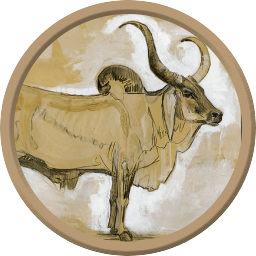
Fantastic Beasts and How to Slay Them: Hodag

You can convince Muggles of a lot, huh?

Specifically, you can tell normal people that the frog-monster eating all the cattle is only a hoax, and that’s apparently enough for everyone. Fantastic Beasts doesn’t really hint at whether memory charms are used to hide the existence of Hodag, so I’m guessing people think a wild animal ate all the calves? That farm went out of business and they never found what ate only the baby animals but that’s a hoax, I guess?

Continue reading “Fantastic Beasts and How to Slay Them: Hodag”

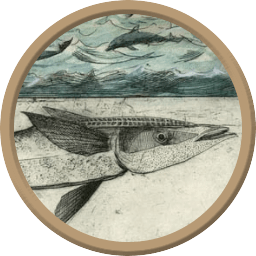
Fantastic Beasts and How to Slay Them: Hippocampus

Some mythical beasts make sense to us, even if they don’t actually, logically or physically work. Many of these beasts are well liked, even thought of as pretty, majestic or cool. Most people would agree that a Pegasus is a fun beast.

“What’s better than a horse?” they say. “How about a horse with wings?” Everyone cheers.

But then there’s those less-well known beasts that are just less fun, less aesthetically pleasing…

“What about a horse that’s also a fish?” a lone voice calls out from the back. The room goes very quiet.

Continue reading “Fantastic Beasts and How to Slay Them: Hippocampus”

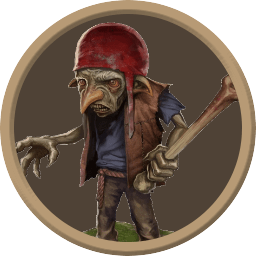
Fantastic Beasts and How to Slay Them: Grindylow

If there’s one clear distinction between the Potterverse and the real world, it’s the absence of health and safety. Yes I know, there are some other minor differences but the main contrast is the clear lack of any safeguarding of anyone’s rights to keep all their limbs.

So of course, the lake around Hogwards is filled with monsters. And of course, they send the youngest students across those waters every year. Neither are there any signs, notices or barriers preventing people from taking a dip.

Continue reading “Fantastic Beasts and How to Slay Them: Grindylow”

Why didn’t You tell me about Resident Evil?

It was a small, niggling regret that I had not played the original Resident Evil.

I had, up until recently, only played Resident Evil 4 and 5. I’ve also played the prologue of RE6, but I didn’t play further because I could already sense I was heading for a less-than-fun time. So I’ve watched a stream of someone else playing it, as well as 7 & 8, whilst marking and lesson planning, and that’s it.

Now, I actually own the RE remake. I hadn’t played it because I’d convinced myself that horror games were not how I should spend my few weekly gaming hours. Spooks and stress before bed sounds bad. However, I’ve also recently grumbled that there’s a Dead Space-sized hole in my gaming that I want filled. As I watched Resident Evil Village, I realised that I should be playing it. Yet, another voice in my head sternly reminded me that I should play Resident Evil 1 first.

So I did…

Why did no one tell me what this game was actually like?!

Continue reading “Why didn’t You tell me about Resident Evil?”

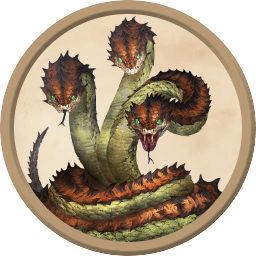
Fantastic Beasts and How to Slay Them: Dragons

Did you know that there are dragons in Dungeons & Dragons? I know, I know, I was surprised as well. Not just a few dragons either. The world of Harry Potter has some dragons to deal with too.

They come in all shapes – from babies the size of a horse to elders thirty feet in length – and all sorts of colours. The ‘good’ dragons are all shiny colours, golds and silvers, whilst the ‘bad’ dudes are standard colours like red and blue. Not only does the colour inform their general behaviour and habits, but different breath weapons.

(I’ll never forget the first time a new player confidentially stated, pre-fight: “Don’t worry guys, I’ve got this. I’m resistant to fire damage!” only to watch in horror as the green dragon unleashed an intense cloud of poison on their fledgling character. Priceless.)

Continue reading “Fantastic Beasts and How to Slay Them: Dragons”

Fantastic Beasts and How to Slay Them: Chimaera

If a fantasy writer created the Chimaera today, you might accuse them of laziness:

“Yeah, so the monster has a lion body and a lion head but it has goat hooves and the tail of a dragon!”

“So you just stuck different animals together? Is that it? And wouldn’t a lion be less dangerous if it doesn’t have claws?”

“Okay…okay, what about a lion with three heads, one is a goat head and one is-“

“Please stop.”

“a dragon head, and it has wings and the tail is actually a snake and…”

And yet, the Chimaera is a staple of fantasy and myth. It such a significant idea, that the word is used as medical and scientific jargon.

Continue reading “Fantastic Beasts and How to Slay Them: Chimaera”

This Wound Matters: Video Game Storytelling

We don’t always play the video game in front of us. Control is often wrested from us, and we are obliged to watch closely. Cutscenes and Quick Time Events interrupt the flow, to push the plot forwards or to steer us down a very specific track. When a game shifts into a lower gear, and player agency is restricted, it is hopefully for a very good reason.

One of the particular reasons a game does this is because the protagonist has suffered a severe, sometimes mortal, wound.

Lot’s of games have this moment. a dramatic scene in which the player-character is reduced to a slow, lumbering mess, desperately dragging themselves to safety or performing one last heroic deed. Sometimes, it creates a deliberately heart-wrenching moment. It’s also a very strange moment from a game logic perspective. Having walked off so many terrible, violent attacks, we are told that this wound is the one that could be our downfall.

Continue reading “This Wound Matters: Video Game Storytelling”